
Jun 12, 2010
S'pore millionaire club the fastest growing
11% of households in S'pore have investable assets of over US$1m
By Gabriel Chen
SINGAPORE added millionaires at a faster rate than anywhere else in the world last year, despite a recession that decimated wealth in many nations.
The millionaire club grew by 35 per cent here, putting Singapore just ahead of second-placed Malaysia, with a 33 per cent gain, and Slovakia on 32 per cent and China on 31 per cent.
In absolute numbers, the United States still has by far the most millionaire households at 4.7 million, followed by Japan and China. But you are more likely to bump into a millionaire here.
An annual study by Boston Consulting Group (BCG) showed that Singapore had the highest concentration of millionaires, as in 2008. A total of 11.4 per cent of households here own more than US$1 million (S$1.4 million) - defined as those with investable assets of over US$1 million, exclusive of property and items like art. BCG did not provide the number of millionaire households in Singapore.
Hong Kong was next in terms of concentration, followed by Switzerland, Kuwait, Qatar, the United Arab Emirates and the US.
Singaporean T.J. Thang, who belongs to the elite group, did not fare too badly during the downturn. 'Some of my stocks fell in value during the recession, but I was still getting attractive property rental yields, and hence my cash grew,' said the 49-year-old businessman.
Economists and wealth managers cite a number of factors as to why Singapore is leading the way in the growth of millionaire households. One is the increasing number of property owners reaping profits from en bloc sales.
'I had a few friends who benefited from the en-bloc windfall and they parked their money in stocks and bonds,' said Mr Richard Wee, chief executive of private bank Lombard Odier Darier Hentsch & Cie (Singapore).
People here are also more likely to capitalise on their familiarity with the region by investing in shares in fast-growing Asia. The MSCI index of Asia-Pacific stocks traded outside Japan rose nearly 70per cent last year - its best performance since 1993 - far outpacing expected gains of just over 20per cent in US and European stocks.
Then there is Singapore's 'liberal admissions policy' to attract talent and the well-heeled, said CIMB Research economist Song Seng Wun.
Today, virtually every big-name private bank which caters to the well-heeled has made Singapore its regional hub.
What this latest report means is, 'for all the private bankers who are here, it confirms that this is the right spot to be', said Mr Rolf Gerber, chief executive of LGT Bank in Liechtenstein (Singapore).
BCG told The Straits Times yesterday: 'Part of the reason for high wealth is that Singapore has a much higher savings rate than a lot of countries with higher average incomes.
'In terms of the 'average Singaporean', the majority of households in Singapore (about 60 per cent) have bankable assets worth between US$250,000 and US$1 million, with more at the lower end of the range than the higher end.'
Another factor could have been the strength of the Singapore currency against the US dollar.
The sharp rise is also likely taking place from a low base. A Merrill Lynch Cap Gemini report last year reported that the number of millionaires in Singapore had fallen 21 per cent to 61,000 in 2008 due to the financial crisis.
Separately, the latest figures from Singapore's taxman show that there were 3,838 taxpayers who earned more than $1 million in 2007.
BCG's study reviewed the assets under management covering 62 markets representing around 99 per cent of global economic output.
gabrielc@sph.com.sg
--------------------------------------------------------------------------------
Top of the list
Country growth in millionaire households
· Singapore: 35%
· Malaysia: 33%
· Slovakia: 32%
· China: 31%
· Morocco: 28%
· South Korea: 28%
· United Arab Emirates: 23%
· Germany: 23%
· Indonesia: 21%
· Algeria: 21%

Monday, June 14, 2010
ST : Wanted: Feedback on changes to Property Tax Act
Jun 12, 2010
Wanted: Feedback on changes to Property Tax Act
THE Ministry of Finance is seeking public feedback on proposed changes to the Property Tax Act.
The proposals are aimed at improving tax administration and providing greater clarity to taxpayers, the ministry said in a statement yesterday.
A total of 12 changes have been proposed in the draft Property Tax (Amendment) Bill.
One proposal is to streamline reporting requirements of property owners by removing the obligation for them to inform the Inland Revenue Authority of Singapore of certain events, such as when a building is completed, rebuilt, enlarged, altered or improved.
Another proposal is to shorten the time for the tax authorities to recover outstanding property tax and refund excess property tax paid from six to five years.
This is in line with the term applying to income tax and goods and services tax.
The ministry also suggests that interest payable on the refund of excess funds pursuant to court orders be computed from the date of the order - similar to income tax matters.
At present, the Property Tax Act does not specify how interest in such matters is to be computed.
The public feedback exercise started yesterday and ends on June 25.
Consultation documents can be accessed at the ministry's website and the Reach consultation portal.
HARSHA JETHNANI
Wanted: Feedback on changes to Property Tax Act
THE Ministry of Finance is seeking public feedback on proposed changes to the Property Tax Act.
The proposals are aimed at improving tax administration and providing greater clarity to taxpayers, the ministry said in a statement yesterday.
A total of 12 changes have been proposed in the draft Property Tax (Amendment) Bill.
One proposal is to streamline reporting requirements of property owners by removing the obligation for them to inform the Inland Revenue Authority of Singapore of certain events, such as when a building is completed, rebuilt, enlarged, altered or improved.
Another proposal is to shorten the time for the tax authorities to recover outstanding property tax and refund excess property tax paid from six to five years.
This is in line with the term applying to income tax and goods and services tax.
The ministry also suggests that interest payable on the refund of excess funds pursuant to court orders be computed from the date of the order - similar to income tax matters.
At present, the Property Tax Act does not specify how interest in such matters is to be computed.
The public feedback exercise started yesterday and ends on June 25.
Consultation documents can be accessed at the ministry's website and the Reach consultation portal.
HARSHA JETHNANI
BT : Feedback on property tax bill wanted
Business Times - 12 Jun 2010
Feedback on property tax bill wanted
THE Ministry of Finance (MOF) yesterday launched a public consultation to seek feedback on proposed changes to the Property Tax Act.
There will be 12 suggested changes in the draft Property Tax (Amendment) Bill 2010. They are the result of periodic reviews of the property tax system, and 'aim to improve tax administration or provide clarity to taxpayers', MOF said in a release.
One proposed amendment will streamline reporting requirements for property owners - they will no longer need to inform the taxman about certain events, such as when a building is completed or rebuilt.
Another suggested change will allow the Comptroller of Property Tax to recover property tax for redevelopment sites prior to the current year, subject to a time-bar limit of five years.
The public consultation exercise will end on June 25. Consultation documents and explanations for the draft bill are available at MOF's website and the REACH consultation portal.
Copyright © 2010 Singapore Press Holdings Ltd. All rights reserved.
Feedback on property tax bill wanted
THE Ministry of Finance (MOF) yesterday launched a public consultation to seek feedback on proposed changes to the Property Tax Act.
There will be 12 suggested changes in the draft Property Tax (Amendment) Bill 2010. They are the result of periodic reviews of the property tax system, and 'aim to improve tax administration or provide clarity to taxpayers', MOF said in a release.
One proposed amendment will streamline reporting requirements for property owners - they will no longer need to inform the taxman about certain events, such as when a building is completed or rebuilt.
Another suggested change will allow the Comptroller of Property Tax to recover property tax for redevelopment sites prior to the current year, subject to a time-bar limit of five years.
The public consultation exercise will end on June 25. Consultation documents and explanations for the draft bill are available at MOF's website and the REACH consultation portal.
Copyright © 2010 Singapore Press Holdings Ltd. All rights reserved.
BT : Preview of EL Development's Stevens Suites within weeks
Business Times - 12 Jun 2010
Preview of EL Development's Stevens Suites within weeks
By UMA SHANKARI
BOUTIQUE property group EL Development will start previewing its 32-unit Stevens Suites late this month or early next month.
The freehold project at Stevens Close will be priced from $1,680 to $2,050 per square foot (psf). It will feature one, two and three-bedroom apartments, and eight penthouses. EL Development bought the site in September 2009 for $900 psf per plot ratio through a private treaty, said the company's managing director Lim Yew Soon.
As the property was designed with small to mid-size families in mind, most of the units are 800-sq-ft two-bedders or 1,100-sq-ft three-bedders, he said. However, larger families can buy two units and connect a two-bedroom unit with a three-bedroom one, which will turn the home into a spacious four-bedroom apartment with a study.
All units will have bathrooms tiled with either natural marble or granite, and will be fitted with European branded kitchen appliances, sanitary ware and fittings. The eight penthouse duplexes will have their own private spas. Other facilities include a gymnasium, a pool and a playground for children, as well as men's and women's steam rooms.
Copyright © 2010 Singapore Press Holdings Ltd. All rights reserved.

FIT FOR SMALL, MEDIUM FAMILIES
Most of the units at Stevens Close are 800-sq-ft two-bedders or 1,100-sq-ft three-bedders. The freehold project will be priced at $1,680 to $2,050 psf.
Preview of EL Development's Stevens Suites within weeks
By UMA SHANKARI
BOUTIQUE property group EL Development will start previewing its 32-unit Stevens Suites late this month or early next month.
The freehold project at Stevens Close will be priced from $1,680 to $2,050 per square foot (psf). It will feature one, two and three-bedroom apartments, and eight penthouses. EL Development bought the site in September 2009 for $900 psf per plot ratio through a private treaty, said the company's managing director Lim Yew Soon.
As the property was designed with small to mid-size families in mind, most of the units are 800-sq-ft two-bedders or 1,100-sq-ft three-bedders, he said. However, larger families can buy two units and connect a two-bedroom unit with a three-bedroom one, which will turn the home into a spacious four-bedroom apartment with a study.
All units will have bathrooms tiled with either natural marble or granite, and will be fitted with European branded kitchen appliances, sanitary ware and fittings. The eight penthouse duplexes will have their own private spas. Other facilities include a gymnasium, a pool and a playground for children, as well as men's and women's steam rooms.
Copyright © 2010 Singapore Press Holdings Ltd. All rights reserved.

FIT FOR SMALL, MEDIUM FAMILIES
Most of the units at Stevens Close are 800-sq-ft two-bedders or 1,100-sq-ft three-bedders. The freehold project will be priced at $1,680 to $2,050 psf.
BT : Millionaire households on the rise
Business Times - 12 Jun 2010
Millionaire households on the rise
Singapore stands out, with such households rising by 35% last year
By GENEVIEVE CUA
THE rebound in asset markets last year has buoyed the global wealth market by 11.5 per cent to US$111.5 trillion, with Singapore making its mark yet again as the market with the highest growth in millionaire households.
Singapore's millionaire households rose 35 per cent in 2009, says the Boston Consulting Group (BCG) in its latest Global Wealth Report. Singapore also had the highest concentration of millionaire households at 11.4 per cent, followed by Hong Kong at 8.8 per cent.
These comprise households with at least US$1 million in assets under management (AUM). BCG's data cover liquid assets and exclude property.
But while asset growth may look robust, there are sobering aspects to the business. Wealth managers' average profitability fell to 22 basis points, from 27 basis points in 2008.
The survey of 114 wealth-management institutions worldwide found that revenues fell despite the fact that assets under management of the firms surveyed increased by an average of 14.3 per cent. Revenue margins - measured by return on assets - slipped by an average 12 basis points to 83 basis points. While managers' costs fell, it was not enough to offset the fall in revenues. Cost-to-income ratio hence rose to 74.4 per cent from 72.3 per cent previously.
BCG says in its report: 'The recovery in AUM masks significant and lasting challenges to the industry's profitability. In most regions, wealth managers face the prospect of persistently low revenues and revenue margins, along with stubbornly high costs.'
It adds: 'Wealth managers must not allow the surge of global wealth to lead to a sense of complacency or a lack of urgency when it comes to addressing (the) challenges. They must focus on quality, precision and service delivery - as well as on truly understanding the client.'
The average cost-to-income ratio in Asia actually rose 24 percentage points between 2007 and 2009. This is a greater magnitude than the global average increase of five percentage points in the same period.
What's more, global assets in 2009 remained in a state of flux. This was driven, says BCG, by a couple of trends: Clients moved assets out of global institutions, spreading them among multiple banks. And, regulatory pressure led to a repatriation of assets from offshore centres to clients' home markets.
Still, net new assets - the difference between asset inflows and outflows excluding market performance - rose by an average of just 1.5 per cent globally. Asia-Pacific saw net new money of 6.2 per cent.
The outlook for Asia and the emerging markets, however, remains bright. BCG expects global wealth to grow at an annual clip of nearly 6 per cent from end-2009 to 2014. Asia's growth is expected to be nearly twice the global rate.
BCG partner Tjun Tang, who also co-authored the report, said: 'There is no doubt that wealth will continue to grow faster in emerging markets, fuelled by strong economic growth. We expect Asia-Pacific, including Japan, to grow at nearly twice the global rate, raising its share of global wealth from 15 per cent in 2009 to almost 20 per cent in 2014.'
Switzerland remained the largest offshore wealth centre with US$2 trillion or 27 per cent of global offshore wealth. BCG lists Singapore and Hong Kong's combined share at US$700 billion or about 9.4 per cent of total offshore AUM of US$7.4 trillion.
In Asia and Europe, market values and increased savings played an equal part in the AUM rise. In the United States, market values accounted for 70 per cent of the rise in AUM. While Europe remained the largest wealth region with US$37 trillion in AUM, the largest absolute gain in wealth was seen in North America. Asia registered the greatest percentage gain in wealth of 22 per cent to US$3.1 trillion.
Clients' asset allocation remained fairly conservative in 2009. Globally, allocations to cash rose declined from 51 per cent in 2008 to 48 per cent last year. But the latter is still higher than the 2007 cash allocation of 44 per cent.
Equities' share was 30 per cent. Here lies part of the reason for wealth managers' lower margins as clients still preferred simpler products. This is in addition to the pressure of fewer transactions and tougher price negotiations.
Tongjai Thanachanan, a core member of BCG's South-east Asia asset and wealth management practice, said: 'Investors have started moving assets out of safe havens, but they still have a lot of wealth parked in basic, low-margin products.
'Their asset allocations tend to be more conservative than their actual risk profiles. In addition, the use of discretionary mandates is down, as investors remain wary of signing over control of their wealth.'
Copyright © 2010 Singapore Press Holdings Ltd. All rights reserved.

Millionaire households on the rise
Singapore stands out, with such households rising by 35% last year
By GENEVIEVE CUA
THE rebound in asset markets last year has buoyed the global wealth market by 11.5 per cent to US$111.5 trillion, with Singapore making its mark yet again as the market with the highest growth in millionaire households.
Singapore's millionaire households rose 35 per cent in 2009, says the Boston Consulting Group (BCG) in its latest Global Wealth Report. Singapore also had the highest concentration of millionaire households at 11.4 per cent, followed by Hong Kong at 8.8 per cent.
These comprise households with at least US$1 million in assets under management (AUM). BCG's data cover liquid assets and exclude property.
But while asset growth may look robust, there are sobering aspects to the business. Wealth managers' average profitability fell to 22 basis points, from 27 basis points in 2008.
The survey of 114 wealth-management institutions worldwide found that revenues fell despite the fact that assets under management of the firms surveyed increased by an average of 14.3 per cent. Revenue margins - measured by return on assets - slipped by an average 12 basis points to 83 basis points. While managers' costs fell, it was not enough to offset the fall in revenues. Cost-to-income ratio hence rose to 74.4 per cent from 72.3 per cent previously.
BCG says in its report: 'The recovery in AUM masks significant and lasting challenges to the industry's profitability. In most regions, wealth managers face the prospect of persistently low revenues and revenue margins, along with stubbornly high costs.'
It adds: 'Wealth managers must not allow the surge of global wealth to lead to a sense of complacency or a lack of urgency when it comes to addressing (the) challenges. They must focus on quality, precision and service delivery - as well as on truly understanding the client.'
The average cost-to-income ratio in Asia actually rose 24 percentage points between 2007 and 2009. This is a greater magnitude than the global average increase of five percentage points in the same period.
What's more, global assets in 2009 remained in a state of flux. This was driven, says BCG, by a couple of trends: Clients moved assets out of global institutions, spreading them among multiple banks. And, regulatory pressure led to a repatriation of assets from offshore centres to clients' home markets.
Still, net new assets - the difference between asset inflows and outflows excluding market performance - rose by an average of just 1.5 per cent globally. Asia-Pacific saw net new money of 6.2 per cent.
The outlook for Asia and the emerging markets, however, remains bright. BCG expects global wealth to grow at an annual clip of nearly 6 per cent from end-2009 to 2014. Asia's growth is expected to be nearly twice the global rate.
BCG partner Tjun Tang, who also co-authored the report, said: 'There is no doubt that wealth will continue to grow faster in emerging markets, fuelled by strong economic growth. We expect Asia-Pacific, including Japan, to grow at nearly twice the global rate, raising its share of global wealth from 15 per cent in 2009 to almost 20 per cent in 2014.'
Switzerland remained the largest offshore wealth centre with US$2 trillion or 27 per cent of global offshore wealth. BCG lists Singapore and Hong Kong's combined share at US$700 billion or about 9.4 per cent of total offshore AUM of US$7.4 trillion.
In Asia and Europe, market values and increased savings played an equal part in the AUM rise. In the United States, market values accounted for 70 per cent of the rise in AUM. While Europe remained the largest wealth region with US$37 trillion in AUM, the largest absolute gain in wealth was seen in North America. Asia registered the greatest percentage gain in wealth of 22 per cent to US$3.1 trillion.
Clients' asset allocation remained fairly conservative in 2009. Globally, allocations to cash rose declined from 51 per cent in 2008 to 48 per cent last year. But the latter is still higher than the 2007 cash allocation of 44 per cent.
Equities' share was 30 per cent. Here lies part of the reason for wealth managers' lower margins as clients still preferred simpler products. This is in addition to the pressure of fewer transactions and tougher price negotiations.
Tongjai Thanachanan, a core member of BCG's South-east Asia asset and wealth management practice, said: 'Investors have started moving assets out of safe havens, but they still have a lot of wealth parked in basic, low-margin products.
'Their asset allocations tend to be more conservative than their actual risk profiles. In addition, the use of discretionary mandates is down, as investors remain wary of signing over control of their wealth.'
Copyright © 2010 Singapore Press Holdings Ltd. All rights reserved.

BT : Price of Sentosa Cove home defies gravity
Business Times - 12 Jun 2010
Price of Sentosa Cove home defies gravity
Top-end bungalow sells for $36m at $2,403 psf despite cautious mood in property market
By KALPANA RASHIWALA
AMID the caution that has crept into the market for mainstream condos since last month, a record price has been set for a top-end bungalow on Sentosa Cove. The property at Paradise Island changed hands in the resale market for $36 million or $2,403 per square foot on land area last month. In terms of both, the absolute amount and unit land price, this is believed to be the priciest bungalow deal in the upscale waterfront housing district, based on caveat records captured by the URA Realis system.
The $2,403 psf unit land price is also probably the highest for a bungalow transaction anywhere in Singapore, property agents say. The deal is understood to have been brokered by DTZ. The two-and-a-half storey bungalow fronting the waterway has a private pool and a berth for a yacht. Homes on Sentosa Cove are sold on 99-year leasehold tenure sites.
The new owner of the Paradise Island bungalow is believed to be a Chinese national who is a Singapore permanent resident. The sellers, who are understood to be Singaporeans, have reaped a handsome profit. According to caveats data, the house was last transacted in September last year at $20.18 million or $1,347 psf. The property was first sold in April 2007 by Ho Bee, the developer of Paradise Island, for $18.1 million or $1,208 psf. The bungalow has a land area of 14,983 sq ft and a built up area of about 17,000 sq ft.
A nearby property on Paradise Island also changed hands in March at $2,390 psf in the resale market but as its land area was smaller at about 8,105 sq ft, the lumpsum price was lower at $19.38 million. Ho Bee's Pardise Island project received Temporary Occupation Permit (TOP) in May last year.
A new record bungalow price could be set for the location if Satinder Garcha's Elevation Developments gets the $3,000 psf it is looking at for its three-storey bungalow at 81 Ocean Drive, which has been completed. With a land area of 9,436 sq ft, the total price would work out to $28.3 million sq ft. The unit's built-up area is 11,500 sq ft. According to KH Tan, managing director of Newsman Realty, which is marketing the property, an offer for $2,700 psf from an American has been received, but Elevation is waiting for its target price.
The unit comes with a glass lift, two master suites, three smaller en-suite bedrooms, an infinity pool, a home theatre room and a spacious lawn. Elevation is offering the property furnished and fitted.
Foreign buyers, including mainland Chinese, have been active buying landed homes in Sentosa Cove, say property agents.
In March, four members of a Liu family from Liaoning are said to have acquired a bungalow each at Kasara - The Lake collection at Sentosa Cove from YTL Corporation. Their purchase prices range from about $15.9 million to nearly $26 million per bungalow or $1,731-1,780 psf on land area. The villas are slated to receive TOP in June 2012.
DTZ executive director (consulting) Ong Choon Fah is not expecting bungalow prices on Sentosa Cove to keep climbing at the same pace, given the more cautious global economic climate which could dent foreign interest. 'However, there is limited supply of just 400 landed homes on Sentosa Cove. And long-term investors may draw the conclusion that putting their money in the Singapore property market is a good investment when you consider the alternatives,' she added. Some market watchers say that the opening of Resorts World Sentosa has also boosted the appeal of owning a home on Sentosa Cove to some foreigners.
Sentosa Cove is the the only place where foreigners who are not Singapore permanent residents are allowed to buy landed homes, although this is still subject to approval from the Land Dealings (Approval) Unit. Also, foreigners buying a landed home on Sentosa Cove do not have to hold the property for at least three years before they can resell it, unlike the case when they buy a landed property on the mainland.
Whether on the mainland or on Sentosa Cove, foreigners may at any one time own just one landed home in Singapore and that too for owner occupation only.
Copyright © 2010 Singapore Press Holdings Ltd. All rights reserved.

UPSCALE HOME
The two-and-a-half storey bungalow fronting the waterway has a private pool and a berth for a yacht
Price of Sentosa Cove home defies gravity
Top-end bungalow sells for $36m at $2,403 psf despite cautious mood in property market
By KALPANA RASHIWALA
AMID the caution that has crept into the market for mainstream condos since last month, a record price has been set for a top-end bungalow on Sentosa Cove. The property at Paradise Island changed hands in the resale market for $36 million or $2,403 per square foot on land area last month. In terms of both, the absolute amount and unit land price, this is believed to be the priciest bungalow deal in the upscale waterfront housing district, based on caveat records captured by the URA Realis system.
The $2,403 psf unit land price is also probably the highest for a bungalow transaction anywhere in Singapore, property agents say. The deal is understood to have been brokered by DTZ. The two-and-a-half storey bungalow fronting the waterway has a private pool and a berth for a yacht. Homes on Sentosa Cove are sold on 99-year leasehold tenure sites.
The new owner of the Paradise Island bungalow is believed to be a Chinese national who is a Singapore permanent resident. The sellers, who are understood to be Singaporeans, have reaped a handsome profit. According to caveats data, the house was last transacted in September last year at $20.18 million or $1,347 psf. The property was first sold in April 2007 by Ho Bee, the developer of Paradise Island, for $18.1 million or $1,208 psf. The bungalow has a land area of 14,983 sq ft and a built up area of about 17,000 sq ft.
A nearby property on Paradise Island also changed hands in March at $2,390 psf in the resale market but as its land area was smaller at about 8,105 sq ft, the lumpsum price was lower at $19.38 million. Ho Bee's Pardise Island project received Temporary Occupation Permit (TOP) in May last year.
A new record bungalow price could be set for the location if Satinder Garcha's Elevation Developments gets the $3,000 psf it is looking at for its three-storey bungalow at 81 Ocean Drive, which has been completed. With a land area of 9,436 sq ft, the total price would work out to $28.3 million sq ft. The unit's built-up area is 11,500 sq ft. According to KH Tan, managing director of Newsman Realty, which is marketing the property, an offer for $2,700 psf from an American has been received, but Elevation is waiting for its target price.
The unit comes with a glass lift, two master suites, three smaller en-suite bedrooms, an infinity pool, a home theatre room and a spacious lawn. Elevation is offering the property furnished and fitted.
Foreign buyers, including mainland Chinese, have been active buying landed homes in Sentosa Cove, say property agents.
In March, four members of a Liu family from Liaoning are said to have acquired a bungalow each at Kasara - The Lake collection at Sentosa Cove from YTL Corporation. Their purchase prices range from about $15.9 million to nearly $26 million per bungalow or $1,731-1,780 psf on land area. The villas are slated to receive TOP in June 2012.
DTZ executive director (consulting) Ong Choon Fah is not expecting bungalow prices on Sentosa Cove to keep climbing at the same pace, given the more cautious global economic climate which could dent foreign interest. 'However, there is limited supply of just 400 landed homes on Sentosa Cove. And long-term investors may draw the conclusion that putting their money in the Singapore property market is a good investment when you consider the alternatives,' she added. Some market watchers say that the opening of Resorts World Sentosa has also boosted the appeal of owning a home on Sentosa Cove to some foreigners.
Sentosa Cove is the the only place where foreigners who are not Singapore permanent residents are allowed to buy landed homes, although this is still subject to approval from the Land Dealings (Approval) Unit. Also, foreigners buying a landed home on Sentosa Cove do not have to hold the property for at least three years before they can resell it, unlike the case when they buy a landed property on the mainland.
Whether on the mainland or on Sentosa Cove, foreigners may at any one time own just one landed home in Singapore and that too for owner occupation only.
Copyright © 2010 Singapore Press Holdings Ltd. All rights reserved.

UPSCALE HOME
The two-and-a-half storey bungalow fronting the waterway has a private pool and a berth for a yacht
BT : US home foreclosures jump 44% to hit another record
Business Times - 11 Jun 2010
US home foreclosures jump 44% to hit another record
(NEW YORK) US home foreclosures reached a record for the second consecutive month in May, with increases in every state, as lenders stepped up property seizures, according to RealtyTrac Inc.
Bank repossessions climbed 44 per cent from May 2009 to 93,777, the Irvine, California-based data company said yesterday in a statement. Foreclosure filings, including default and auction notices, rose about one per cent to 322,920. One out of every 400 US households received a filing.
'We're nowhere near out of the woods,' Rick Sharga, RealtyTrac's senior vice president for marketing, said in a telephone interview. 'We're likely to set a quarterly record for home seizures if June is anything like May.'
Lenders are completing the 'inevitable progression' of taking properties from homeowners who stopped paying, Mr Sharga said. He predicted last month that another 5 million delinquent mortgages will end in foreclosure in addition to properties that had already been repossessed. 'The second quarter won't be the peak,' Mr Sharga said. 'I'm not even sure 2010 will be.'
The previous record for seizures was 92,432 in April. Last month was the first in which every state had an increase in repossessions from a year earlier, according to RealtyTrac.
US private payrolls rose by 41,000 in May, Labor Department data showed last week. The hiring of temporary census workers boosted overall payroll growth to 431,000. The jobless rate fell to 9.7 per cent, from 9.9 per cent in April.
Almost a quarter of America's mortgage holders owed more than their homes were worth in the first quarter, Zillow.com said last month. Bank sales of foreclosed properties accounted for more than a fifth of all US home transactions in March, the Seattle-based real estate data provider said.
Wells Fargo & Co and Bank of America Corp, the two largest US home lenders, are cutting principal on some mortgages in an effort to keep owners in properties and get them to pay at least part of what they owe. -- Bloomberg
Copyright © 2010 Singapore Press Holdings Ltd. All rights reserved.
US home foreclosures jump 44% to hit another record
(NEW YORK) US home foreclosures reached a record for the second consecutive month in May, with increases in every state, as lenders stepped up property seizures, according to RealtyTrac Inc.
Bank repossessions climbed 44 per cent from May 2009 to 93,777, the Irvine, California-based data company said yesterday in a statement. Foreclosure filings, including default and auction notices, rose about one per cent to 322,920. One out of every 400 US households received a filing.
'We're nowhere near out of the woods,' Rick Sharga, RealtyTrac's senior vice president for marketing, said in a telephone interview. 'We're likely to set a quarterly record for home seizures if June is anything like May.'
Lenders are completing the 'inevitable progression' of taking properties from homeowners who stopped paying, Mr Sharga said. He predicted last month that another 5 million delinquent mortgages will end in foreclosure in addition to properties that had already been repossessed. 'The second quarter won't be the peak,' Mr Sharga said. 'I'm not even sure 2010 will be.'
The previous record for seizures was 92,432 in April. Last month was the first in which every state had an increase in repossessions from a year earlier, according to RealtyTrac.
US private payrolls rose by 41,000 in May, Labor Department data showed last week. The hiring of temporary census workers boosted overall payroll growth to 431,000. The jobless rate fell to 9.7 per cent, from 9.9 per cent in April.
Almost a quarter of America's mortgage holders owed more than their homes were worth in the first quarter, Zillow.com said last month. Bank sales of foreclosed properties accounted for more than a fifth of all US home transactions in March, the Seattle-based real estate data provider said.
Wells Fargo & Co and Bank of America Corp, the two largest US home lenders, are cutting principal on some mortgages in an effort to keep owners in properties and get them to pay at least part of what they owe. -- Bloomberg
Copyright © 2010 Singapore Press Holdings Ltd. All rights reserved.
BT : China's May property price surge second highest on record
Business Times - 11 Jun 2010
China's May property price surge second highest on record
Govt measures so far have affected only transaction volumes: economist
(BEIJING) China's property prices rose at the second- fastest pace on record in May, showing little sign yet that the government crackdown on speculation will work to avert an asset-price bubble.
The 12.4 per cent gain compared with a record 12.8 per cent increase in April from a year earlier, the National Bureau of Statistics said on its website. The data series, covering 70 cities, began in 2005. The value of sales slid 25 per cent.
Yesterday's figures, along with data showing a bigger jump in exports than forecast in May, signal the dangers of maintaining stimulus measures adopted during the global recession. Concern that Premier Wen Jiabao's government will step up policy tightening, along with dangers posed from Europe's debt crisis, has sent China's benchmark stock index down 21 per cent this year.
'Housing prices continue to grow apace, it appears the government measures so far have only affected the transaction volumes,' said Liu Li-Gang, an economist at Australia and New Zealand Banking Group in Hong Kong. 'The government will have to work more to contain the strong demand' for property, he said, adding that higher interest rates would be most effective.
Last month marked the first easing in the annual rate of property price gains in 11 months. On a monthly basis, values advanced 0.2 per cent.
Sales in Beijing, Shanghai and Shenzhen fell as much as 70 per cent in May from the previous month and land sales for residential development projects in 70 Chinese cities fell 14 per cent, the official Shanghai Securities News reported earlier this month.
An index tracking 34 real-estate companies has plunged about 28 per cent this year, the worst performer among five subgroups of Shanghai's stock benchmark. It slid one per cent yesterday.
Sales by China Vanke, the nation's biggest publicly traded property developer, dropped 20 per cent in May from a year ago, and Guangzhou R&F Properties Co's contracted sales last month shrank 48 per cent on year, according to the developers' stock exchange filings.
'These exceptionally low transaction volumes are partly a result of banks' unwillingness to lend and also the result of buyers taking a step back' to wait and see what the government's next measures may be, Michael Klibaner, head of research in China for Jones Lang LaSalle said earlier this week.
Officials may introduce a trial property tax after already tightening sales rules for developers, raising some down payment requirements and restricting loans for multiple-home buyers, according to state media.
Besides industry-specific measures such as requirements for larger down-payments for some homes, the government on May 2 raised banks' reserve requirements for the third time this year to contain overheating risks after first-quarter economy expanded at the fastest pace in almost 3 years.
'The government's recent measures to cool the housing market focus on limiting investment and increasing the supply of public and low-cost housing,' Barclays economists Peng Wensheng and Chang Jian wrote in a June 7 report. 'This represents a regime shift in housing policy' and more measures are likely to come, they wrote.
Prices may tumble between 20 per cent and 30 per cent in coming quarters, according to the Barclays analysts' projections. The impact on the economy will be cushioned by rising public housing construction, they wrote.
Last month's biggest year-on-year price gains were in Hainan, the southern island being developed as a tourist destination. Hainan's Haikou and Sanya cities reported annual increases of 52.8 per cent and 50.8 per cent. Among the 70 cities covered, 12 had price declines in May from the previous month, including Beijing, Nanjing and Guangzhou. Eastern China's Hangzhou saw the biggest monthly drop, at 0.6 per cent.
Investment in real estate rose 38 per cent to 1.39 trillion yuan (S$288 billion) in the first five months of this year, after a 36.2 per cent gain in the January-April period, according to the statistics bureau.
Property sales by area rose 22.5 per cent in the first five months to 302 million square metre, the statistics bureau said. The pace is compared with an increase of 32.8 per cent between January and April. The area under construction rose 72.4 per cent from a year earlier to 615 million square metres.
For the full year, property sales may shrink 30 per cent from 2009, Jing Ulrich, Hong Kong-based chairwoman of China equities and commodities at JPMorgan Chase, said before yesterday's release. -- Bloomberg
Copyright © 2010 Singapore Press Holdings Ltd. All rights reserved.
China's May property price surge second highest on record
Govt measures so far have affected only transaction volumes: economist
(BEIJING) China's property prices rose at the second- fastest pace on record in May, showing little sign yet that the government crackdown on speculation will work to avert an asset-price bubble.
The 12.4 per cent gain compared with a record 12.8 per cent increase in April from a year earlier, the National Bureau of Statistics said on its website. The data series, covering 70 cities, began in 2005. The value of sales slid 25 per cent.
Yesterday's figures, along with data showing a bigger jump in exports than forecast in May, signal the dangers of maintaining stimulus measures adopted during the global recession. Concern that Premier Wen Jiabao's government will step up policy tightening, along with dangers posed from Europe's debt crisis, has sent China's benchmark stock index down 21 per cent this year.
'Housing prices continue to grow apace, it appears the government measures so far have only affected the transaction volumes,' said Liu Li-Gang, an economist at Australia and New Zealand Banking Group in Hong Kong. 'The government will have to work more to contain the strong demand' for property, he said, adding that higher interest rates would be most effective.
Last month marked the first easing in the annual rate of property price gains in 11 months. On a monthly basis, values advanced 0.2 per cent.
Sales in Beijing, Shanghai and Shenzhen fell as much as 70 per cent in May from the previous month and land sales for residential development projects in 70 Chinese cities fell 14 per cent, the official Shanghai Securities News reported earlier this month.
An index tracking 34 real-estate companies has plunged about 28 per cent this year, the worst performer among five subgroups of Shanghai's stock benchmark. It slid one per cent yesterday.
Sales by China Vanke, the nation's biggest publicly traded property developer, dropped 20 per cent in May from a year ago, and Guangzhou R&F Properties Co's contracted sales last month shrank 48 per cent on year, according to the developers' stock exchange filings.
'These exceptionally low transaction volumes are partly a result of banks' unwillingness to lend and also the result of buyers taking a step back' to wait and see what the government's next measures may be, Michael Klibaner, head of research in China for Jones Lang LaSalle said earlier this week.
Officials may introduce a trial property tax after already tightening sales rules for developers, raising some down payment requirements and restricting loans for multiple-home buyers, according to state media.
Besides industry-specific measures such as requirements for larger down-payments for some homes, the government on May 2 raised banks' reserve requirements for the third time this year to contain overheating risks after first-quarter economy expanded at the fastest pace in almost 3 years.
'The government's recent measures to cool the housing market focus on limiting investment and increasing the supply of public and low-cost housing,' Barclays economists Peng Wensheng and Chang Jian wrote in a June 7 report. 'This represents a regime shift in housing policy' and more measures are likely to come, they wrote.
Prices may tumble between 20 per cent and 30 per cent in coming quarters, according to the Barclays analysts' projections. The impact on the economy will be cushioned by rising public housing construction, they wrote.
Last month's biggest year-on-year price gains were in Hainan, the southern island being developed as a tourist destination. Hainan's Haikou and Sanya cities reported annual increases of 52.8 per cent and 50.8 per cent. Among the 70 cities covered, 12 had price declines in May from the previous month, including Beijing, Nanjing and Guangzhou. Eastern China's Hangzhou saw the biggest monthly drop, at 0.6 per cent.
Investment in real estate rose 38 per cent to 1.39 trillion yuan (S$288 billion) in the first five months of this year, after a 36.2 per cent gain in the January-April period, according to the statistics bureau.
Property sales by area rose 22.5 per cent in the first five months to 302 million square metre, the statistics bureau said. The pace is compared with an increase of 32.8 per cent between January and April. The area under construction rose 72.4 per cent from a year earlier to 615 million square metres.
For the full year, property sales may shrink 30 per cent from 2009, Jing Ulrich, Hong Kong-based chairwoman of China equities and commodities at JPMorgan Chase, said before yesterday's release. -- Bloomberg
Copyright © 2010 Singapore Press Holdings Ltd. All rights reserved.
Thursday, June 10, 2010
TODAY ONLINE : Hot property market to cool?
Hot property market to cool?
Analysts expect drop in transactions
05:55 AM Jun 10, 2010
by Wong Siew Ying
SINGAPORE - The local property market is in for a correction in the coming months, said industry players, citing tell-tale signs like a plateau in home prices and a drop in transaction volumes.
The Singapore Institute of Surveyors and Valuers (SISV) said there were only 899 caveats lodged for condominiums in the first three weeks of last month. There were 3,060 for the whole of April.
And although new condominium projects are still doing well, property agents said homes sales in the secondary or resale market have dropped by up to 20 per cent recently.
Dennis Wee Group said buyers are becoming more cautious going by last month's sales figures.
"Instead of seeing a 30 per cent increase in transactions as in the month before, I only saw a marginal 3.5 per cent increase," said Mr Chris Koh, director at Dennis Wee Properties.
"A lot of buyers are pulling their handbrakes. What they feel today is that the seller is asking for too high a price and 'if I am not in a hurry, why not sit and wait?'" he added.
Industry data from SISV showed sales falling across various districts as of the middle of last month.
The prime districts of 9, 10 and 11 recorded a 76 per cent drop, while the downtown city area saw the sharpest decline of 88 per cent.
Analysts also expect transaction volumes to fall by 5 to 10 per cent due to the World Cup which begins tomorrow.
Meanwhile, ECG Property said it now takes longer to close a transaction. It used to be about 45 days before, but is now up to 80 days.
Industry players expect the market correction to last between three and six months, and some said home prices could trend down by 3 to 5 per cent on average during this period.
"Some of these prices are over book-keeping value where some banks may not even match some of the asking prices today," said Mr Eric Cheng, chief executive officer of ECG Property.
"That also shows that these prices could be a speculation price instead of a true reflection price. I think the market is going through a slight correction," he said.
Analysts said prices may also be capped by more land supply due to be released by the Government. Other risk factors include volatile stock markets and the European debt crisis.
Copyright 2010 MediaCorp Pte Ltd | All Rights Reserved
Analysts expect drop in transactions
05:55 AM Jun 10, 2010
by Wong Siew Ying
SINGAPORE - The local property market is in for a correction in the coming months, said industry players, citing tell-tale signs like a plateau in home prices and a drop in transaction volumes.
The Singapore Institute of Surveyors and Valuers (SISV) said there were only 899 caveats lodged for condominiums in the first three weeks of last month. There were 3,060 for the whole of April.
And although new condominium projects are still doing well, property agents said homes sales in the secondary or resale market have dropped by up to 20 per cent recently.
Dennis Wee Group said buyers are becoming more cautious going by last month's sales figures.
"Instead of seeing a 30 per cent increase in transactions as in the month before, I only saw a marginal 3.5 per cent increase," said Mr Chris Koh, director at Dennis Wee Properties.
"A lot of buyers are pulling their handbrakes. What they feel today is that the seller is asking for too high a price and 'if I am not in a hurry, why not sit and wait?'" he added.
Industry data from SISV showed sales falling across various districts as of the middle of last month.
The prime districts of 9, 10 and 11 recorded a 76 per cent drop, while the downtown city area saw the sharpest decline of 88 per cent.
Analysts also expect transaction volumes to fall by 5 to 10 per cent due to the World Cup which begins tomorrow.
Meanwhile, ECG Property said it now takes longer to close a transaction. It used to be about 45 days before, but is now up to 80 days.
Industry players expect the market correction to last between three and six months, and some said home prices could trend down by 3 to 5 per cent on average during this period.
"Some of these prices are over book-keeping value where some banks may not even match some of the asking prices today," said Mr Eric Cheng, chief executive officer of ECG Property.
"That also shows that these prices could be a speculation price instead of a true reflection price. I think the market is going through a slight correction," he said.
Analysts said prices may also be capped by more land supply due to be released by the Government. Other risk factors include volatile stock markets and the European debt crisis.
Copyright 2010 MediaCorp Pte Ltd | All Rights Reserved
BT : Mumbai plans world's tallest apartment block
Business Times - 10 Jun 2010
Mumbai plans world's tallest apartment block
Called World One, it will be 117 storeys high and is likely to be ready by 2014
(MUMBAI) An Indian property group on Tuesday unveiled plans to build the world's tallest purely residential tower in Mumbai, the country's booming financial capital.
Lodha Developers said the tower would be 117 storeys high and would be designed by New York-based Pei Cobb Freed and Partners, the architects of the Louvre Pyramid in Paris and the Bank of China building in Hong Kong.
'At 1,450 feet (442 metres), the tower will be the tallest of its kind,' Abhisheck Lodha, managing director of Lodha Developers, told reporters as he presented a scale model of the complex.
Called World One, it will be located in central Mumbai on the plot of a defunct textile mill and should be completed by 2014.
The development will contain more than 300 apartments and include large green spaces, cafes and an open-air observatory.
Mumbai's sky-high property prices continued to rise during the global economic downturn, even though the city is plagued by water shortages and poor infrastructure.
The city's central district was a textile mill hub until a few decades ago, but a large labour strike in the 1980s and the entry of new power loom complexes led to the demise of the old mills.
In their place have risen shopping malls, luxury apartments, hotels and high-tech corporate offices.
'This is to meet the aspirations of the global Indian and to establish a landmark for the city,' Mr Lodha said. 'We are trying to create the Rockefeller Centre-type experience.'
The developer expects the base price of an apartment to be upwards of 75 million rupees (S$2.25 million), while luxury multi-storey properties could cost up to US$10.5 million.
The tower will cost about US$440 million to build, the Lodha group said, and apartment sales will start this month.
At present, the world's tallest residential tower is the 323-metre Q1 on Australia's Gold Coast, while Mumbai's 60-storey Imperial twin towers are India's tallest, at 249 metres.
There are taller buildings around the world, including Dubai's Burj Khalifa at 828 metres and the Canton TV Tower in Guangzhou, China, at 610 metres, but these are not purely residential.
Residential rates in central Mumbai have risen about 30 per cent in the past six months, analysts say, due to higher input costs.
'The market for luxury homes in Mumbai is growing,' said Param Desai, a real estate analyst with Mumbai's Angel Broking.
'Liquidity is improving and salaries, disposable incomes are on the rise,' he added.
India's economy recorded 7.4 per cent growth for the year to March, official data released last month showed.
India's top property firm, DLF, has plans to launch Mumbai's largest luxury residential project a few blocks from the proposed World One tower.
This project would have 1,000 apartments in three buildings of 80-90 floors each, industry sources said\. \-- AFP
Copyright © 2010 Singapore Press Holdings Ltd. All rights reserved.

Creating a landmark: An artist's impression of the building which will have more than 300 apartments and include cafes and an open-air observatory
Mumbai plans world's tallest apartment block
Called World One, it will be 117 storeys high and is likely to be ready by 2014
(MUMBAI) An Indian property group on Tuesday unveiled plans to build the world's tallest purely residential tower in Mumbai, the country's booming financial capital.
Lodha Developers said the tower would be 117 storeys high and would be designed by New York-based Pei Cobb Freed and Partners, the architects of the Louvre Pyramid in Paris and the Bank of China building in Hong Kong.
'At 1,450 feet (442 metres), the tower will be the tallest of its kind,' Abhisheck Lodha, managing director of Lodha Developers, told reporters as he presented a scale model of the complex.
Called World One, it will be located in central Mumbai on the plot of a defunct textile mill and should be completed by 2014.
The development will contain more than 300 apartments and include large green spaces, cafes and an open-air observatory.
Mumbai's sky-high property prices continued to rise during the global economic downturn, even though the city is plagued by water shortages and poor infrastructure.
The city's central district was a textile mill hub until a few decades ago, but a large labour strike in the 1980s and the entry of new power loom complexes led to the demise of the old mills.
In their place have risen shopping malls, luxury apartments, hotels and high-tech corporate offices.
'This is to meet the aspirations of the global Indian and to establish a landmark for the city,' Mr Lodha said. 'We are trying to create the Rockefeller Centre-type experience.'
The developer expects the base price of an apartment to be upwards of 75 million rupees (S$2.25 million), while luxury multi-storey properties could cost up to US$10.5 million.
The tower will cost about US$440 million to build, the Lodha group said, and apartment sales will start this month.
At present, the world's tallest residential tower is the 323-metre Q1 on Australia's Gold Coast, while Mumbai's 60-storey Imperial twin towers are India's tallest, at 249 metres.
There are taller buildings around the world, including Dubai's Burj Khalifa at 828 metres and the Canton TV Tower in Guangzhou, China, at 610 metres, but these are not purely residential.
Residential rates in central Mumbai have risen about 30 per cent in the past six months, analysts say, due to higher input costs.
'The market for luxury homes in Mumbai is growing,' said Param Desai, a real estate analyst with Mumbai's Angel Broking.
'Liquidity is improving and salaries, disposable incomes are on the rise,' he added.
India's economy recorded 7.4 per cent growth for the year to March, official data released last month showed.
India's top property firm, DLF, has plans to launch Mumbai's largest luxury residential project a few blocks from the proposed World One tower.
This project would have 1,000 apartments in three buildings of 80-90 floors each, industry sources said\. \-- AFP
Copyright © 2010 Singapore Press Holdings Ltd. All rights reserved.

Creating a landmark: An artist's impression of the building which will have more than 300 apartments and include cafes and an open-air observatory
BT : Aussie home loan approvals down in April
Business Times - 10 Jun 2010
Aussie home loan approvals down in April
Interest rate increases cool demand from first-time buyers
(SYDNEY) Australian home loan approvals fell in April for a seventh straight month, adding to evidence that the Group of 20's most aggressive round of interest rate increases has cooled demand among first-time buyers.
The number of loans granted to build or buy houses and apartments slipped 1.8 per cent to 47,669 from March, when they declined a revised 2.9 per cent, the statistics bureau said in Sydney yesterday. The median estimate of 20 economists surveyed by Bloomberg News was for a 2 per cent drop.
Plunging housing finance approvals may cool the nation's property market, which surged 20 per cent in the 12 months through March 31.
Yesterday's report may also prompt central bank governor Glenn Stevens to keep the benchmark interest rate unchanged in July for a second month after boosting the rate six times between October and May. He described monetary policy last week as 'appropriate for the near term'.
'Housing finance demand has moderated considerably,' Bill Evans, chief economist at Westpac Banking Corp in Sydney, said ahead of yesterday's report. 'Finance to first home buyers has retreated sharply,' he added.
Borrowing has tumbled since the start of the fourth quarter after Prime Minister Kevin Rudd's government began reducing A$21,000 (S$24,425) grants to first-time buyers of newly built dwellings. Those grants were lowered in two steps to A$7,000 on Jan 1.
First-home buyers accounted for 16.3 per cent of dwellings that were financed in April, up from 15.9 per cent in March and compared to 28.1 per cent in April 2009, the statistics bureau said yesterday.
Mr Stevens and his board increased Australia's overnight cash rate target by 150 basis points between October and last month to 4.5 per cent.
The increases have led to signs of cooling Australia's economy, which skirted last year's global recession, stoked by government stimulus spending and a rebound in the property market. Gross domestic product growth slowed to 0.5 per cent in the first quarter from the previous three months, when it jumped 1.1 per cent, a report showed last week. A report published yesterday by Westpac Banking Corp showed consumer confidence fell in June for a third straight month.
The total value of home loans rose 0.8 per cent to A$21.7 billion in April, yesterday's report showed.
The value of lending to owner-occupiers advanced 0.6 per cent. The value of loans to investors gained 1.3 per cent\. \-- Bloomberg
Copyright © 2010 Singapore Press Holdings Ltd. All rights reserved.

Slowdown: Plunging housing finance approvals may cool the Australian property market, which surged 20 per cent in the 12 months through March31
Aussie home loan approvals down in April
Interest rate increases cool demand from first-time buyers
(SYDNEY) Australian home loan approvals fell in April for a seventh straight month, adding to evidence that the Group of 20's most aggressive round of interest rate increases has cooled demand among first-time buyers.
The number of loans granted to build or buy houses and apartments slipped 1.8 per cent to 47,669 from March, when they declined a revised 2.9 per cent, the statistics bureau said in Sydney yesterday. The median estimate of 20 economists surveyed by Bloomberg News was for a 2 per cent drop.
Plunging housing finance approvals may cool the nation's property market, which surged 20 per cent in the 12 months through March 31.
Yesterday's report may also prompt central bank governor Glenn Stevens to keep the benchmark interest rate unchanged in July for a second month after boosting the rate six times between October and May. He described monetary policy last week as 'appropriate for the near term'.
'Housing finance demand has moderated considerably,' Bill Evans, chief economist at Westpac Banking Corp in Sydney, said ahead of yesterday's report. 'Finance to first home buyers has retreated sharply,' he added.
Borrowing has tumbled since the start of the fourth quarter after Prime Minister Kevin Rudd's government began reducing A$21,000 (S$24,425) grants to first-time buyers of newly built dwellings. Those grants were lowered in two steps to A$7,000 on Jan 1.
First-home buyers accounted for 16.3 per cent of dwellings that were financed in April, up from 15.9 per cent in March and compared to 28.1 per cent in April 2009, the statistics bureau said yesterday.
Mr Stevens and his board increased Australia's overnight cash rate target by 150 basis points between October and last month to 4.5 per cent.
The increases have led to signs of cooling Australia's economy, which skirted last year's global recession, stoked by government stimulus spending and a rebound in the property market. Gross domestic product growth slowed to 0.5 per cent in the first quarter from the previous three months, when it jumped 1.1 per cent, a report showed last week. A report published yesterday by Westpac Banking Corp showed consumer confidence fell in June for a third straight month.
The total value of home loans rose 0.8 per cent to A$21.7 billion in April, yesterday's report showed.
The value of lending to owner-occupiers advanced 0.6 per cent. The value of loans to investors gained 1.3 per cent\. \-- Bloomberg
Copyright © 2010 Singapore Press Holdings Ltd. All rights reserved.

Slowdown: Plunging housing finance approvals may cool the Australian property market, which surged 20 per cent in the 12 months through March31
BT : Aussie office sector draws record foreign buyers
Business Times - 10 Jun 2010
Aussie office sector draws record foreign buyers
(SYDNEY) Foreign investment in Australia's office market climbed to a record high in the past 12 months as the economy's resilience continued to draw investors seeking growth, property firm CBRE said yesterday.
In the 12 months to June, major office sales totalled A$2.4 billion (S$2.8 billion) of which 70 per cent was spent by offshore investors, CBRE said.
'International investors are coming to Australia with firm mandates approved and the equity to spend. They are confident about our real estate and see exceptionally good growth prospects,' CBRE regional director Rob Sewell said in a statement. 'If the assets fit the brief, they come to the table and bid.'
Around 49 per cent of buyers were from Asia with South Korean investors accounting for 28 per cent, due in part to the South Korean National Pension Service's purchase of Sydney's Aurora Place for A$685 million, CBRE said.
German investors accounted for about 15 per cent of the buys and Swiss players represented 5 per cent.
Australia's economy remained resilient with its jobless rate at 5.4 per cent, compared with 9.7 per cent in the United States and around 10 per cent for Europe.
CBRE said yields on the office buildings purchased by offshore investors ranged from 7.5 per cent to 8 per cent, and they were likely to continue to dominate the market in the second half of the year\. \-- Reuters
Copyright © 2010 Singapore Press Holdings Ltd. All rights reserved.
Aussie office sector draws record foreign buyers
(SYDNEY) Foreign investment in Australia's office market climbed to a record high in the past 12 months as the economy's resilience continued to draw investors seeking growth, property firm CBRE said yesterday.
In the 12 months to June, major office sales totalled A$2.4 billion (S$2.8 billion) of which 70 per cent was spent by offshore investors, CBRE said.
'International investors are coming to Australia with firm mandates approved and the equity to spend. They are confident about our real estate and see exceptionally good growth prospects,' CBRE regional director Rob Sewell said in a statement. 'If the assets fit the brief, they come to the table and bid.'
Around 49 per cent of buyers were from Asia with South Korean investors accounting for 28 per cent, due in part to the South Korean National Pension Service's purchase of Sydney's Aurora Place for A$685 million, CBRE said.
German investors accounted for about 15 per cent of the buys and Swiss players represented 5 per cent.
Australia's economy remained resilient with its jobless rate at 5.4 per cent, compared with 9.7 per cent in the United States and around 10 per cent for Europe.
CBRE said yields on the office buildings purchased by offshore investors ranged from 7.5 per cent to 8 per cent, and they were likely to continue to dominate the market in the second half of the year\. \-- Reuters
Copyright © 2010 Singapore Press Holdings Ltd. All rights reserved.
BT : Morgan Stanley to advise ING on property unit's sale
Business Times - 10 Jun 2010
Morgan Stanley to advise ING on property unit's sale
(LONDON) Dutch bank ING has appointed Morgan Stanley for a possible sale of its real estate management arm as the bank reinvents itself after a state bailout, sources familiar with the matter said.
The hiring of the US investment bank follows months of speculation on the future of the unit - which has US$92 billion in assets under management - while ING is making heavy cuts to its business at the behest of the European Union.
A spokesman for ING in Amsterdam declined to comment. Morgan Stanley also declined to comment.
The bank, which received 10 billion euros (S$16.9 billion) of state aid in 2008, said in February that it would keep Real Estate Investment Management (REIM) within the bank, scrapping an earlier planned transfer into ING Investment Management.
Property market sources suggest the appointment of banker William Connelly to the helm of REIM in March following the sudden retirement of George Jautze suggested a trade sale or break-up of the unit was a serious ambition\. \-- Reuters
Copyright © 2010 Singapore Press Holdings Ltd. All rights reserved.
Morgan Stanley to advise ING on property unit's sale
(LONDON) Dutch bank ING has appointed Morgan Stanley for a possible sale of its real estate management arm as the bank reinvents itself after a state bailout, sources familiar with the matter said.
The hiring of the US investment bank follows months of speculation on the future of the unit - which has US$92 billion in assets under management - while ING is making heavy cuts to its business at the behest of the European Union.
A spokesman for ING in Amsterdam declined to comment. Morgan Stanley also declined to comment.
The bank, which received 10 billion euros (S$16.9 billion) of state aid in 2008, said in February that it would keep Real Estate Investment Management (REIM) within the bank, scrapping an earlier planned transfer into ING Investment Management.
Property market sources suggest the appointment of banker William Connelly to the helm of REIM in March following the sudden retirement of George Jautze suggested a trade sale or break-up of the unit was a serious ambition\. \-- Reuters
Copyright © 2010 Singapore Press Holdings Ltd. All rights reserved.
BT : Hyatt plans to develop more hotel properties
Business Times - 10 Jun 2010
Hyatt plans to develop more hotel properties
(LOS ANGELES) Hyatt Hotels Corp, the lodging chain controlled by the Pritzker family, plans to put more money into developing properties, president and chief executive officer Mark Hoplamazian said.
The Chicago-based company, which had 434 locations as of March 31, is buying and investing in joint ventures and debt financing to develop North American hotels. The strategy contrasts with rivals seeking to pare holdings.
'We are willing to invest our own money to see a developer put the shovel in the ground sooner than later,' Mr Hoplamazian said during an interview on Tuesday at the soon-to-open Andaz hotel on 41st Street and Fifth Avenue in Manhattan.
Marriott International, the largest US hotel chain, and Starwood Hotels & Resorts Worldwide, the third-biggest, have said they are selling stakes in properties to focus on the operation of their hotels.
Starwood sold two of its W Hotels in Manhattan to St Giles Hotels in April as part of the plan.
Hyatt also is looking to expand the Grand Hyatt and boutique Andaz brands through new development, recapitalising stalled projects or taking over other hotels, Mr Hoplamazian said.
The company in April won the management contract for the Aviara Resort in California, formerly a Four Seasons Hotels venue, and said it will rebrand the property as a Park Hyatt. It converted the Ivy Hotel in San Diego into an Andaz in February.
Hyatt, which raised US$1.09 billion in an initial public offering last year, opened an Andaz property on Wall Street in Manhattan this year. It expects to debut the 41st Street location next month.
Mr Hoplamazian compared the brand to Starwood's W chain. 'The customer base is large enough and they are robust spenders on travel. We think for sure that Andaz has every bit of the potential as the W Hotel chain.' - Bloomberg
Copyright © 2010 Singapore Press Holdings Ltd. All rights reserved.
Hyatt plans to develop more hotel properties
(LOS ANGELES) Hyatt Hotels Corp, the lodging chain controlled by the Pritzker family, plans to put more money into developing properties, president and chief executive officer Mark Hoplamazian said.
The Chicago-based company, which had 434 locations as of March 31, is buying and investing in joint ventures and debt financing to develop North American hotels. The strategy contrasts with rivals seeking to pare holdings.
'We are willing to invest our own money to see a developer put the shovel in the ground sooner than later,' Mr Hoplamazian said during an interview on Tuesday at the soon-to-open Andaz hotel on 41st Street and Fifth Avenue in Manhattan.
Marriott International, the largest US hotel chain, and Starwood Hotels & Resorts Worldwide, the third-biggest, have said they are selling stakes in properties to focus on the operation of their hotels.
Starwood sold two of its W Hotels in Manhattan to St Giles Hotels in April as part of the plan.
Hyatt also is looking to expand the Grand Hyatt and boutique Andaz brands through new development, recapitalising stalled projects or taking over other hotels, Mr Hoplamazian said.
The company in April won the management contract for the Aviara Resort in California, formerly a Four Seasons Hotels venue, and said it will rebrand the property as a Park Hyatt. It converted the Ivy Hotel in San Diego into an Andaz in February.
Hyatt, which raised US$1.09 billion in an initial public offering last year, opened an Andaz property on Wall Street in Manhattan this year. It expects to debut the 41st Street location next month.
Mr Hoplamazian compared the brand to Starwood's W chain. 'The customer base is large enough and they are robust spenders on travel. We think for sure that Andaz has every bit of the potential as the W Hotel chain.' - Bloomberg
Copyright © 2010 Singapore Press Holdings Ltd. All rights reserved.
BT : Office prices set to rise over next 12 months: JLL
Business Times - 10 Jun 2010
Office prices set to rise over next 12 months: JLL
By KALPANA RASHIWALA
(SINGAPORE) The Republic's prime office capital values are poised to rise over the next 12 months in anticipation of rental increases. This is fuelling interest among overseas investors in the Singapore office market, says Jones Lang LaSalle.
'The number of investors coming to town and looking at offices has multiplied radically in the past three months. Most are looking to invest in a 12-18 month window rather than necessarily immediately,' says JLL's head of markets Chris Archibold.
These potential overseas investors are mostly European funds (primarily from Germany and the UK). Middle Eastern and US investors make up the other key groups of foreign investors keen on Singapore offices, he added.
JLL is forecasting that the average capital value for Prime Grade A (Raffles Place) office space will rise to $1,800 per square foot by the end of this year, up from the Q1 2010 figure of $1,700 psf. This is the level where capital values have stabilised since Q3 last year.
Office capital values are expected to appreciate further next year as the rental recovery gathers momentum amid strong economic fundamentals in Singapore and Asia, says JLL's MD for Singapore and South-east Asia Chris Fossick.
The picture for Singapore office rents has already started to brighten. Mr Archibold forecasts that for the whole of this year, the average monthly prime Grade A Raffles Place rental value could increase by about 5 per cent; growth will be limited by sentiment, given that the global economic situation is still pretty fragile.
'Notable leasing deals are expected to be completed over the next few months and this, combined with the trend of redeveloping CBD buildings into residential use, may see sufficient rebalancing of supply and demand for rents to stabilise over the next three to six months,' says Mr Archibold.
An estimated 1.3 million sq ft net lettable area of existing office space is expected to be taken out from the market assuming government approvals for redevelopment - mostly to residential use - are granted. The stock expected to be removed from the market includes Marina House, VTB Building, UIC Building and North Bridge Commercial Complex.
Leasing activity for new office projects began to pick up in Q3 last year. Mr Archibold says: 'We are aware of eight to 10 occupiers, studying potential leasing deals of about 100,000 sq ft each, that are now looking at their options.'
While such news may entice some investors to buy office space, not everyone who's sniffing out office deals these days is eyeing the leasing and rental recovery story.
CB Richard Ellis executive director (investment properties) Jeremy Lake highlights that two discernible profiles of investors have emerged in the Singapore office market over the past year.
'The first are those who intend to buy an office building and develop it into alternative use, mostly residential to cater to current strong demand for homes in the CBD. This group typically comprises residential developers that are targeting older Grade B office blocks, which are thus gaining a new lease of life from their latent value arising from residential development potential.
'The second group - which would include Singapore Reits and European and Asian property funds - are keen on high-quality office buildings for their rental income and capital appreciation potential given the office rental recovery underway.'
The second profile reflects the traditional reason for buying offices in Singapore.
More than $1 billion of Singapore office investment sales - cutting across both types of buyers - have been sealed since the beginning of last year. They include Parakou Building, Anson House, VTB Building, 1 Finlayson Green, Robinson Point and Marina House.
According to JLL, office investment volumes have picked up since the middle of last year across the Asia-Pacific, and capital values have bottomed in most markets. 'Foreign and domestic investors looking to buy based on rising rental income have a choice of markets to consider including Hong Kong, Singapore, Shanghai and Melbourne. Rents are likely to move upwards in these cities with capital values following in line over the next 12 months,' says Megan Walters, head of research for Asia Pacific Capital Markets at JLL.
JLL's Q1 Office Investor Rental Weather Map for Asia-Pacific shows that the sunniest point on the map is Hong Kong, where the pace of recovery in the Grade A office leasing market appears to be faster than expected. 'Demand has been driven by consolidation and from PRC companies looking to set up in Hong Kong,' Dr Walters said.
In Singapore, the average monthly prime Grade A Raffles Place rental value for small space users (2,000-5,000 sq ft) dipped 0.6 per cent quarter on quarter to $7.75 psf in Q1 2010.
'We have yet to finalise the Q2 rental trend numbers but we fully expect to see a reversal in the downward rental trend,' says Mr Archibold. 'Assuming a growing economy, we expect rents to increase at a moderate pace for the remainder of 2010 and to pick up more rapidly in 2011 and 2012.'
Copyright © 2010 Singapore Press Holdings Ltd. All rights reserved.

New lease of life: VTB Building is expected to be part of the estimated 1.3 million sq ft of office space likely to be taken out of the market for redevelopment
Office prices set to rise over next 12 months: JLL
By KALPANA RASHIWALA
(SINGAPORE) The Republic's prime office capital values are poised to rise over the next 12 months in anticipation of rental increases. This is fuelling interest among overseas investors in the Singapore office market, says Jones Lang LaSalle.
'The number of investors coming to town and looking at offices has multiplied radically in the past three months. Most are looking to invest in a 12-18 month window rather than necessarily immediately,' says JLL's head of markets Chris Archibold.
These potential overseas investors are mostly European funds (primarily from Germany and the UK). Middle Eastern and US investors make up the other key groups of foreign investors keen on Singapore offices, he added.
JLL is forecasting that the average capital value for Prime Grade A (Raffles Place) office space will rise to $1,800 per square foot by the end of this year, up from the Q1 2010 figure of $1,700 psf. This is the level where capital values have stabilised since Q3 last year.
Office capital values are expected to appreciate further next year as the rental recovery gathers momentum amid strong economic fundamentals in Singapore and Asia, says JLL's MD for Singapore and South-east Asia Chris Fossick.
The picture for Singapore office rents has already started to brighten. Mr Archibold forecasts that for the whole of this year, the average monthly prime Grade A Raffles Place rental value could increase by about 5 per cent; growth will be limited by sentiment, given that the global economic situation is still pretty fragile.
'Notable leasing deals are expected to be completed over the next few months and this, combined with the trend of redeveloping CBD buildings into residential use, may see sufficient rebalancing of supply and demand for rents to stabilise over the next three to six months,' says Mr Archibold.
An estimated 1.3 million sq ft net lettable area of existing office space is expected to be taken out from the market assuming government approvals for redevelopment - mostly to residential use - are granted. The stock expected to be removed from the market includes Marina House, VTB Building, UIC Building and North Bridge Commercial Complex.
Leasing activity for new office projects began to pick up in Q3 last year. Mr Archibold says: 'We are aware of eight to 10 occupiers, studying potential leasing deals of about 100,000 sq ft each, that are now looking at their options.'
While such news may entice some investors to buy office space, not everyone who's sniffing out office deals these days is eyeing the leasing and rental recovery story.
CB Richard Ellis executive director (investment properties) Jeremy Lake highlights that two discernible profiles of investors have emerged in the Singapore office market over the past year.
'The first are those who intend to buy an office building and develop it into alternative use, mostly residential to cater to current strong demand for homes in the CBD. This group typically comprises residential developers that are targeting older Grade B office blocks, which are thus gaining a new lease of life from their latent value arising from residential development potential.
'The second group - which would include Singapore Reits and European and Asian property funds - are keen on high-quality office buildings for their rental income and capital appreciation potential given the office rental recovery underway.'
The second profile reflects the traditional reason for buying offices in Singapore.
More than $1 billion of Singapore office investment sales - cutting across both types of buyers - have been sealed since the beginning of last year. They include Parakou Building, Anson House, VTB Building, 1 Finlayson Green, Robinson Point and Marina House.
According to JLL, office investment volumes have picked up since the middle of last year across the Asia-Pacific, and capital values have bottomed in most markets. 'Foreign and domestic investors looking to buy based on rising rental income have a choice of markets to consider including Hong Kong, Singapore, Shanghai and Melbourne. Rents are likely to move upwards in these cities with capital values following in line over the next 12 months,' says Megan Walters, head of research for Asia Pacific Capital Markets at JLL.
JLL's Q1 Office Investor Rental Weather Map for Asia-Pacific shows that the sunniest point on the map is Hong Kong, where the pace of recovery in the Grade A office leasing market appears to be faster than expected. 'Demand has been driven by consolidation and from PRC companies looking to set up in Hong Kong,' Dr Walters said.
In Singapore, the average monthly prime Grade A Raffles Place rental value for small space users (2,000-5,000 sq ft) dipped 0.6 per cent quarter on quarter to $7.75 psf in Q1 2010.
'We have yet to finalise the Q2 rental trend numbers but we fully expect to see a reversal in the downward rental trend,' says Mr Archibold. 'Assuming a growing economy, we expect rents to increase at a moderate pace for the remainder of 2010 and to pick up more rapidly in 2011 and 2012.'
Copyright © 2010 Singapore Press Holdings Ltd. All rights reserved.

New lease of life: VTB Building is expected to be part of the estimated 1.3 million sq ft of office space likely to be taken out of the market for redevelopment
BT : Heeton launches new Grange Rd condominium
Business Times - 10 Jun 2010
Heeton launches new Grange Rd condominium
All 30 iLiv@Grange units available; Lumos to be relaunched
By UMA SHANKARI
HEETON Holdings plans to start construction of its new Grange Road condominium iLiv@Grange by September this year, chief operating officer Danny Low said at the project's unveiling yesterday.
The company also intends to relaunch The Lumos within the next two months. Sales of units in the Leonie Hill project have been put off since early 2008 as Heeton and its partner Koh Brothers waited for the luxury property market to recover.
At iLiv@Grange, all 30 apartments in the exclusive luxury development were made available to buyers from yesterday. But even though no units have been sold as yet, Heeton intends to proceed with construction and sell units as and when there is interest from buyers.
'We bought the site in 2007 and three years have passed,' said Mr Low. 'We are open to selling any unit, but either way, we will start construction, maybe by September.'
Apartments in iLiv@Grange Grange will go for 'above $3,000 per square foot (psf)', but the price could be lower on a psf basis for bigger apartments. Units in other projects in the vicinity are selling for $2,700-$3,500 psf, according to Mr Low.
iLiv@Grange's architecture is the creation of Mercurio Design Lab. The property also boasts interiors designed by yoo, the brainchild of John Hitchcox and Philippe Starck.
'iLiv@Grange was designed with ultimate living in mind, and no detail was spared to achieve this ambition,' said Mr Low. 'By combining the talents of MDL and yoo, we hope to create an architectural masterpiece that is also a celebration of haute couture living.'
iLiv@Grange, which is yoo's inaugural project in Singapore, promises impeccable landscapes and classy interiors. It offers a selection of one, two and three-bedroom apartments, each complete with furnishings such as sanitary wares and fittings from HansGrohe by Starck and Duravit by Starck.
There are also two double-storey penthouses furnished with private roof terraces and pools. The project is scheduled for completion in October 2013.
But while Heeton will sell units in iLiv@Grange, the group's focus will be on selling remaining apartments in the 53-unit The Lumos as the project approaches completion. Just 19 units in the development had been sold as at April 2010.
Units in The Lumos have gone for about $3,200 psf on average, Mr Low said. Heeton and Koh Brothers are now building a new showflat for the project, which will be relaunched in July or August. Pricing has not been decided yet, Mr Low said.
Heeton also has an upcoming development at Killiney Road on the site of the old Mitre Hotel. The company has engaged an international architect for the project and further details will be unveiled at a later date.
Copyright © 2010 Singapore Press Holdings Ltd. All rights reserved.

Haute couture living: iLiv@Grange's architecture is by Mercurio Design Lab. The property boasts interiors by yoo, the brainchild of John Hitchcox and Philippe Starck
Heeton launches new Grange Rd condominium
All 30 iLiv@Grange units available; Lumos to be relaunched
By UMA SHANKARI
HEETON Holdings plans to start construction of its new Grange Road condominium iLiv@Grange by September this year, chief operating officer Danny Low said at the project's unveiling yesterday.
The company also intends to relaunch The Lumos within the next two months. Sales of units in the Leonie Hill project have been put off since early 2008 as Heeton and its partner Koh Brothers waited for the luxury property market to recover.
At iLiv@Grange, all 30 apartments in the exclusive luxury development were made available to buyers from yesterday. But even though no units have been sold as yet, Heeton intends to proceed with construction and sell units as and when there is interest from buyers.
'We bought the site in 2007 and three years have passed,' said Mr Low. 'We are open to selling any unit, but either way, we will start construction, maybe by September.'
Apartments in iLiv@Grange Grange will go for 'above $3,000 per square foot (psf)', but the price could be lower on a psf basis for bigger apartments. Units in other projects in the vicinity are selling for $2,700-$3,500 psf, according to Mr Low.
iLiv@Grange's architecture is the creation of Mercurio Design Lab. The property also boasts interiors designed by yoo, the brainchild of John Hitchcox and Philippe Starck.
'iLiv@Grange was designed with ultimate living in mind, and no detail was spared to achieve this ambition,' said Mr Low. 'By combining the talents of MDL and yoo, we hope to create an architectural masterpiece that is also a celebration of haute couture living.'
iLiv@Grange, which is yoo's inaugural project in Singapore, promises impeccable landscapes and classy interiors. It offers a selection of one, two and three-bedroom apartments, each complete with furnishings such as sanitary wares and fittings from HansGrohe by Starck and Duravit by Starck.
There are also two double-storey penthouses furnished with private roof terraces and pools. The project is scheduled for completion in October 2013.
But while Heeton will sell units in iLiv@Grange, the group's focus will be on selling remaining apartments in the 53-unit The Lumos as the project approaches completion. Just 19 units in the development had been sold as at April 2010.
Units in The Lumos have gone for about $3,200 psf on average, Mr Low said. Heeton and Koh Brothers are now building a new showflat for the project, which will be relaunched in July or August. Pricing has not been decided yet, Mr Low said.
Heeton also has an upcoming development at Killiney Road on the site of the old Mitre Hotel. The company has engaged an international architect for the project and further details will be unveiled at a later date.
Copyright © 2010 Singapore Press Holdings Ltd. All rights reserved.
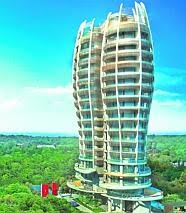
Haute couture living: iLiv@Grange's architecture is by Mercurio Design Lab. The property boasts interiors by yoo, the brainchild of John Hitchcox and Philippe Starck
ST : Heeton unveils Grange Road designer condo
Jun 10, 2010
Heeton unveils Grange Road designer condo
By Joyce Teo
SINGAPORE'S first apartments conceived by well-known design firm yoo were unveiled yesterday to upmarket buyers at possible prices of between $4 million and $10 million.
Three years after it bought the Grange Road site, developer Heeton Holdings showed off its innovative concept for the 30-unit designer condo iLiv@Grange. Most of the units are expected to command a price of more than $3,000 per sq ft.
It invited 160 potential buyers to the condo's show gallery yesterday evening, and is open to one-on-one price discussions with them.
Heeton chief operating officer Danny Low said most of the apartments would sell for more than $3,000 psf, in contrast to the surrounding projects' $2,700 to $3,500 psf going rate.
The firm is prepared to hold the project if need be, and will start construction soon, he said.
Former wet market operator Heeton bought the plot at around $1,706 psf per plot ratio - excluding development charges - back in the boom days of 2007.
And, like many other developers, it decided to delay the launch because of the global financial crisis.
In a bid to come up with a striking design and appeal to the high-end crowd, it has in the meantime switched the condo's architect from well-known local architect Timothy Seow and CPG Consultants to Italy's Mercurio Design Lab (MDL).
The result is that the 16-storey iLiv@Grange has morphed from the predictable rectangular-shaped condo that was originally planned, into a curvaceous facade that draws inspiration from the calla lily. Designer Massimo Mercurio told reporters yesterday that 'buildings need to be sexy'.
The landscaping and apartment interiors of iLiv@Grange are designed by yoo, founded by celebrated designer Philippe Starck and British developer John Hitchcox - who flew in for the media and potential buyers' session.
iLiv@Grange's one-, two- and three-bedroom apartments range from about 1,100 sq ft to 3,000 sq ft.
There are two double-storey penthouses at some 3,300 sq ft and 3,500 sq ft which come with three bedrooms, a private roof terrace and pool. Heeton is inviting price offers for the penthouses.
Each apartment is served by a private lift.
Mr Low said Heeton is considering holding a roadshow in Shanghai to showcase the development and will put a showflat at the site by the third quarter of next year.
Heeton's next project will be on the former Mitre Hotel site in Killiney Road. Designed by an unnamed British architect, it may be released for sale in the first half of next year.
And it is looking to relaunch The Lumos in Leonie Hill in July or August at $3,000 psf and upwards. The project was first released for sale in 2007.
--------------------------------------------------------------------------------
The result is that the 16-storey iLiv@Grange has morphed from the predictable rectangular-shaped condo that was originally planned, into a curvaceous facade that draws inspiration from the calla lily.

The iLiv@Grange designer condo. -- PHOTO: HEETON HOLDINGS
Heeton unveils Grange Road designer condo
By Joyce Teo
SINGAPORE'S first apartments conceived by well-known design firm yoo were unveiled yesterday to upmarket buyers at possible prices of between $4 million and $10 million.
Three years after it bought the Grange Road site, developer Heeton Holdings showed off its innovative concept for the 30-unit designer condo iLiv@Grange. Most of the units are expected to command a price of more than $3,000 per sq ft.
It invited 160 potential buyers to the condo's show gallery yesterday evening, and is open to one-on-one price discussions with them.
Heeton chief operating officer Danny Low said most of the apartments would sell for more than $3,000 psf, in contrast to the surrounding projects' $2,700 to $3,500 psf going rate.
The firm is prepared to hold the project if need be, and will start construction soon, he said.
Former wet market operator Heeton bought the plot at around $1,706 psf per plot ratio - excluding development charges - back in the boom days of 2007.
And, like many other developers, it decided to delay the launch because of the global financial crisis.
In a bid to come up with a striking design and appeal to the high-end crowd, it has in the meantime switched the condo's architect from well-known local architect Timothy Seow and CPG Consultants to Italy's Mercurio Design Lab (MDL).
The result is that the 16-storey iLiv@Grange has morphed from the predictable rectangular-shaped condo that was originally planned, into a curvaceous facade that draws inspiration from the calla lily. Designer Massimo Mercurio told reporters yesterday that 'buildings need to be sexy'.
The landscaping and apartment interiors of iLiv@Grange are designed by yoo, founded by celebrated designer Philippe Starck and British developer John Hitchcox - who flew in for the media and potential buyers' session.
iLiv@Grange's one-, two- and three-bedroom apartments range from about 1,100 sq ft to 3,000 sq ft.
There are two double-storey penthouses at some 3,300 sq ft and 3,500 sq ft which come with three bedrooms, a private roof terrace and pool. Heeton is inviting price offers for the penthouses.
Each apartment is served by a private lift.
Mr Low said Heeton is considering holding a roadshow in Shanghai to showcase the development and will put a showflat at the site by the third quarter of next year.
Heeton's next project will be on the former Mitre Hotel site in Killiney Road. Designed by an unnamed British architect, it may be released for sale in the first half of next year.
And it is looking to relaunch The Lumos in Leonie Hill in July or August at $3,000 psf and upwards. The project was first released for sale in 2007.
--------------------------------------------------------------------------------
The result is that the 16-storey iLiv@Grange has morphed from the predictable rectangular-shaped condo that was originally planned, into a curvaceous facade that draws inspiration from the calla lily.

The iLiv@Grange designer condo. -- PHOTO: HEETON HOLDINGS
ST : Yanlord and Reco Yizhong to develop Chengdu site
Jun 10, 2010
Yanlord and Reco Yizhong to develop Chengdu site
A UNIT of Singapore-listed developer Yanlord Land Group and an affiliate of GIC Real Estate are jointly developing a large prime residential site in the south-west Chinese city of Chengdu.
GIC Real Estate's affiliate, Reco Yizhong, will work with Yanlord to develop the project, backed by US$300 million (S$424 million) in registered capital.
GIC Real Estate is the property arm of the Government of Singapore Investment Corporation (GIC).
Yanlord has already notched up successes in Chengdu, including Hengye International Plaza, a commercial development, and Hengye Star Garden, a high-end residential development.
To facilitate the new project, the two parties have set up a joint venture firm, Yanlord Property Investments (YPI) - 75 per cent of it owned by Yanlord's unit Yanlord Land and 25 per cent owned by Reco.
The joint venture has, in turn, teamed up with a unit of Yanlord Land, Yanlord Land Chengdu, to set up a new subsidiary, Yanlord Real Estate Chengdu, to undertake the Chengdu development.
Yanlord Land Chengdu has a 60 per cent stake in the new unit while YPI has a 40 per cent stake in the entity, which has a registered capital of US$300 million.
The development site is in Panchenggang in the Jinjiang district of Chengdu.
The upcoming project, with a total planned gross floor area of about 390,660 sq m, will be connected to one of the city's metro lines via the Gangguanchang station, operational in 2012.
It will also be located close to attractions in the city such as the Sha River and Tazishan Park, an announcement from the Yanlord Land Group said yesterday.
Tazishan Park is an area set aside for Chengdu's ecological park and the construction of schools.
The project site is also close to Chengdu's central business district, Tianfu Square.
Chengdu, with a population of about 11 million, is in China's Sichuan province.
HARSHA JETHNANI
Yanlord and Reco Yizhong to develop Chengdu site
A UNIT of Singapore-listed developer Yanlord Land Group and an affiliate of GIC Real Estate are jointly developing a large prime residential site in the south-west Chinese city of Chengdu.
GIC Real Estate's affiliate, Reco Yizhong, will work with Yanlord to develop the project, backed by US$300 million (S$424 million) in registered capital.
GIC Real Estate is the property arm of the Government of Singapore Investment Corporation (GIC).
Yanlord has already notched up successes in Chengdu, including Hengye International Plaza, a commercial development, and Hengye Star Garden, a high-end residential development.
To facilitate the new project, the two parties have set up a joint venture firm, Yanlord Property Investments (YPI) - 75 per cent of it owned by Yanlord's unit Yanlord Land and 25 per cent owned by Reco.
The joint venture has, in turn, teamed up with a unit of Yanlord Land, Yanlord Land Chengdu, to set up a new subsidiary, Yanlord Real Estate Chengdu, to undertake the Chengdu development.
Yanlord Land Chengdu has a 60 per cent stake in the new unit while YPI has a 40 per cent stake in the entity, which has a registered capital of US$300 million.
The development site is in Panchenggang in the Jinjiang district of Chengdu.
The upcoming project, with a total planned gross floor area of about 390,660 sq m, will be connected to one of the city's metro lines via the Gangguanchang station, operational in 2012.
It will also be located close to attractions in the city such as the Sha River and Tazishan Park, an announcement from the Yanlord Land Group said yesterday.
Tazishan Park is an area set aside for Chengdu's ecological park and the construction of schools.
The project site is also close to Chengdu's central business district, Tianfu Square.
Chengdu, with a population of about 11 million, is in China's Sichuan province.
HARSHA JETHNANI
ST : Two more development sites up for sale
Jun 9, 2010
Two more development sites up for sale
ANOTHER two development sites have been launched for sale.
The first is the 52-unit Goodrich Park, a collective sale site in Simon Lane.
Credo Real Estate, which is marketing the freehold site, said its sellers are looking for offers in the region of $80 million to $85 million.
This would translate to a land rate of $585 to $620 per sq ft (psf) per plot ratio, excluding development charges. The sellers are currently waiting to hear from the Urban Redevelopment Authority about whether any development charge will be due.
Built in the 1980s, Goodrich Park sits on a land area of 97,703 sq ft and is near Kovan MRT station.
Under the 2008 Master Plan, the site is zoned for residential development with a plot ratio of 1.4 and an allowable height of up to five storeys.
This allows for a total gross floor area of about 136,784 sq ft.
The site can be turned into approximately 120 apartment units with an average size of 1,100 sq ft, depending on layout and configuration, said Credo managing director Karamjit Singh.
The second site, the 21-unit Cavenagh Mansions near Orchard Road, is fully owned by a private company, Teck Jin.
It has a land area of about 19,813 sq ft and under the 2008 Master Plan, it is zoned for residential use at a plot ratio of 2.1.
Marketing agent Knight Frank said the guide price for the plot is $55 million to $60 million, which would translate to a land price of $1,258 psf to $1,367 psf.
The site has a potential gross floor area of about 45,768 sq ft, inclusive of an additional 10 per cent space for balconies.
An estimated development charge of $2.567 million, inclusive of 10 per cent balcony space, is payable.
The site can be redeveloped into 57 apartments of 800 sq ft on average and the buyer may expect to break even at about $1,750 psf to $1,850 psf, Knight Frank said.
It was reportedly put out for sale in 2006 at an asking price of just $27 million.
Last week, two estates - Waldorf Mansions off Balestier Road and Foh Pin Mansion in Charlton Road - were launched for collective sale.
JOYCE TEO
Two more development sites up for sale
ANOTHER two development sites have been launched for sale.
The first is the 52-unit Goodrich Park, a collective sale site in Simon Lane.
Credo Real Estate, which is marketing the freehold site, said its sellers are looking for offers in the region of $80 million to $85 million.
This would translate to a land rate of $585 to $620 per sq ft (psf) per plot ratio, excluding development charges. The sellers are currently waiting to hear from the Urban Redevelopment Authority about whether any development charge will be due.
Built in the 1980s, Goodrich Park sits on a land area of 97,703 sq ft and is near Kovan MRT station.
Under the 2008 Master Plan, the site is zoned for residential development with a plot ratio of 1.4 and an allowable height of up to five storeys.
This allows for a total gross floor area of about 136,784 sq ft.
The site can be turned into approximately 120 apartment units with an average size of 1,100 sq ft, depending on layout and configuration, said Credo managing director Karamjit Singh.
The second site, the 21-unit Cavenagh Mansions near Orchard Road, is fully owned by a private company, Teck Jin.
It has a land area of about 19,813 sq ft and under the 2008 Master Plan, it is zoned for residential use at a plot ratio of 2.1.
Marketing agent Knight Frank said the guide price for the plot is $55 million to $60 million, which would translate to a land price of $1,258 psf to $1,367 psf.
The site has a potential gross floor area of about 45,768 sq ft, inclusive of an additional 10 per cent space for balconies.
An estimated development charge of $2.567 million, inclusive of 10 per cent balcony space, is payable.
The site can be redeveloped into 57 apartments of 800 sq ft on average and the buyer may expect to break even at about $1,750 psf to $1,850 psf, Knight Frank said.
It was reportedly put out for sale in 2006 at an asking price of just $27 million.
Last week, two estates - Waldorf Mansions off Balestier Road and Foh Pin Mansion in Charlton Road - were launched for collective sale.
JOYCE TEO
ST : MCC Land top bidder for 99-year Sembawang plot
Jun 9, 2010
MCC Land top bidder for 99-year Sembawang plot
$131.7m bid much higher than expected; analysts say release of more sites yet to have major impact
By Joyce Teo
A CHINA-BASED developer has lodged the top bid of $131.7 million - considerably higher than expected - for a 99-year leasehold plot in Sembawang which attracted seven bids in all.
MCC Land (Singapore) said if it is awarded the job, it will build a 300-unit low-rise condominium on the site, at the junction of Sembawang Road and Canberra Drive.
Managing director Tan Zhiyong said MCC's proposed development will feature lush landscaping.
Part of state-owned Metallurgical Corp of China, MCC put in a bid that works out to $387.3 per sq ft per plot ratio (psf ppr).
CBRE Research executive director Li Hiaw Ho had expected it to fetch $280 to $310 psf ppr, or $95 million to $105 million.
In a re-run of the government land tender earlier this month, Malaysia's SP Setia International came in second, with a bid of $122.55 million or $360.35 psf ppr.
Other bidders included Far East Organization and MCL Land. Frasers Centrepoint was last, with $85 million or $250 psf ppr.
The Sembawang site has a permissible gross floor area of 340,085 sq ft.
The top bid is on the bullish side and suggests that the ramping up of land supply has not had a major impact on the market, said Colliers International's director for research and advisory Tay Huey Ying.
'We are not seeing exorbitant bids but the results show that developers are still hungry for land,' Ms Tay said.
The Government has said it will make available a record amount of land for sale in the second half of this year.
Ngee Ann Polytechnic real estate lecturer Nicholas Mak said the number of bids was lower than in some recent tenders, but that this could be partly because the site is less attractive than some others.
He expects more subdued bidding for future sites as developers will soon be spoilt for choice. 'Once they have acquired a sizeable piece of land, they are unlikely to be as aggressive in future tenders,' he added.
MCC Land's Mr Tan said the project's break-even cost will be $600-plus psf. Units will sell for $700 to $800 psf when launched in six to nine months. By comparison, units at The Estuary nearby sold in March to April for $660 to $800 psf, and in the resale market, units in a freehold low-rise condo, Northwood, went for $680 to $730 psf from January to April.
This is MCC's second residential site here. In March, it won a tender for an executive condo site in Yishun - its maiden development project here - with a bid of $127.8 million or $281 psf ppr.
joyceteo@sph.com.sg
MCC Land top bidder for 99-year Sembawang plot
$131.7m bid much higher than expected; analysts say release of more sites yet to have major impact
By Joyce Teo
A CHINA-BASED developer has lodged the top bid of $131.7 million - considerably higher than expected - for a 99-year leasehold plot in Sembawang which attracted seven bids in all.
MCC Land (Singapore) said if it is awarded the job, it will build a 300-unit low-rise condominium on the site, at the junction of Sembawang Road and Canberra Drive.
Managing director Tan Zhiyong said MCC's proposed development will feature lush landscaping.
Part of state-owned Metallurgical Corp of China, MCC put in a bid that works out to $387.3 per sq ft per plot ratio (psf ppr).
CBRE Research executive director Li Hiaw Ho had expected it to fetch $280 to $310 psf ppr, or $95 million to $105 million.
In a re-run of the government land tender earlier this month, Malaysia's SP Setia International came in second, with a bid of $122.55 million or $360.35 psf ppr.
Other bidders included Far East Organization and MCL Land. Frasers Centrepoint was last, with $85 million or $250 psf ppr.
The Sembawang site has a permissible gross floor area of 340,085 sq ft.
The top bid is on the bullish side and suggests that the ramping up of land supply has not had a major impact on the market, said Colliers International's director for research and advisory Tay Huey Ying.
'We are not seeing exorbitant bids but the results show that developers are still hungry for land,' Ms Tay said.
The Government has said it will make available a record amount of land for sale in the second half of this year.
Ngee Ann Polytechnic real estate lecturer Nicholas Mak said the number of bids was lower than in some recent tenders, but that this could be partly because the site is less attractive than some others.
He expects more subdued bidding for future sites as developers will soon be spoilt for choice. 'Once they have acquired a sizeable piece of land, they are unlikely to be as aggressive in future tenders,' he added.
MCC Land's Mr Tan said the project's break-even cost will be $600-plus psf. Units will sell for $700 to $800 psf when launched in six to nine months. By comparison, units at The Estuary nearby sold in March to April for $660 to $800 psf, and in the resale market, units in a freehold low-rise condo, Northwood, went for $680 to $730 psf from January to April.
This is MCC's second residential site here. In March, it won a tender for an executive condo site in Yishun - its maiden development project here - with a bid of $127.8 million or $281 psf ppr.
joyceteo@sph.com.sg
Subscribe to:
Posts (Atom)

 Posts
Posts


